Gravity
Learning Goals
Explore Newtonian Gravity via fores, potentials, and least action principle.
Cover some commonly used spherical distributions
Explore stellar dynamics ins more realistic (yet static) potentials using gala package.
Learn key principles of numerical methods used in gravitational dynamics
Collision-less Systems
Gravity, despite being the weakest of the four fundamental forces, plays a pivotal role on astronomical scales, shaping the structures and dynamics of the universe. Unlike the electromagnetic, strong, and weak forces, which dominate at subatomic and terrestrial scales, gravity’s influence becomes profound over vast distances and when acting on large masses. It governs the formation and evolution of globular clusters, galaxies, and planetary systems, orchestrating the cosmic dance of celestial bodies. Through gravitational attraction, stars coalesce into clusters, galaxies bind their billions of stars together, and planets form stable orbits around their host stars.
In this part of the course, we will delve into collective gravitational phenomena that are essential to understanding astrophysical systems. Key topics include dynamical friction, the process by which massive objects lose momentum and energy due to interactions with a background of less massive particles, shaping the motion of stars and satellites in galaxies. We’ll explore two-body relaxation, which describes how random gravitational encounters between stars in a cluster lead to a redistribution of energy and angular momentum, driving systems toward thermal equilibrium. Lastly, we will study virialization, a crucial concept that describes how self-gravitating systems reach a state of balance between kinetic and potential energy. These phenomena not only underpin the stability and dynamics of astrophysical systems but also provide a framework for understanding their formation, evolution, and ultimate fate.
First let’s recall some basic facts of Newtonian gravity. This chapter is mostly based on Part V of Kaiser: Elements of Astrophysics: pages 285-300. The other important book on this subject is Binney and Tremaine (2008) which we have online access to through Stanford Libraries. On the Canvas course site you can find a .pdf version in the files directory.
Newtonian Gravity 3 Ways
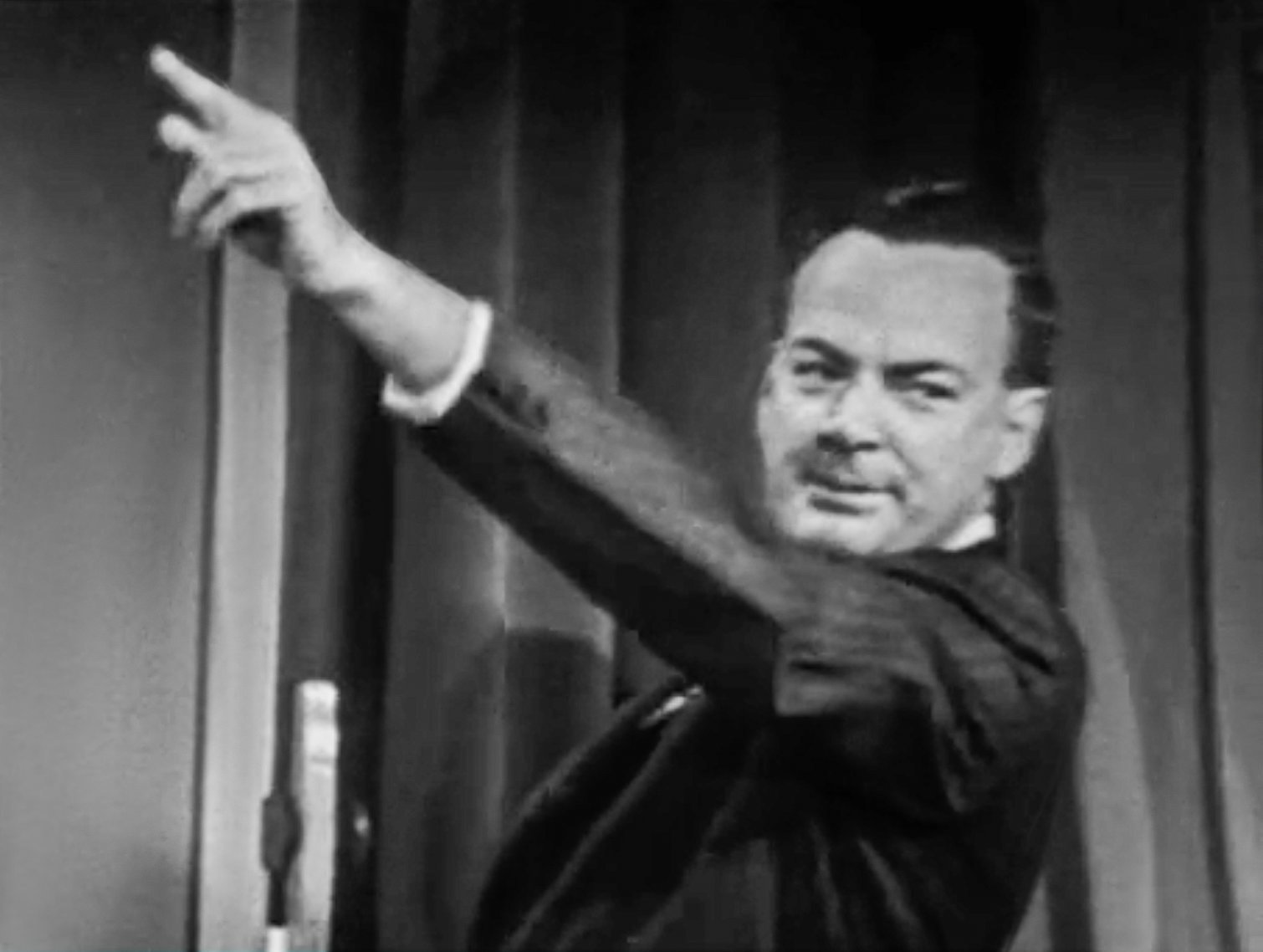 Newtonian gravity can be understood from three complementary perspectives, each providing unique insights into the nature of gravitational interactions. In the following sections, we will explore these perspectives: Forces, where we consider how gravitational acceleration arises directly from pairwise interactions or a continuous mass distribution; Potentials, where we describe the gravitational field as a scalar potential that satisfies Poisson’s equation and links mass to field strength; and Action, where the motion of self-gravitating systems is derived from a variational principle. Together, these approaches offer a comprehensive view of the dynamics governed by Newtonian gravity. If it has been a while you may appreciate (re-)watch Feynman’s Messenger lectures on these topics. At the very least they may help to motivate further study.
For gravity the 4th way please sign up for the General Relativity course physics PHYSICS 262: General Relativity
Forces
In Newton’s theory the acceleration of a particle is the sum over all other particles of \(G\) times the mass times the inverse square of the distance.
\[ \ddot{\mathbf{x}}_j=\sum_{i \neq j} \frac{G m_i\left(\mathbf{x}_i-\mathbf{x}_j\right)}{\left|\mathbf{x}_i-\mathbf{x}_j\right|^3} \]
where
\[ G \simeq 6.67 \times 10^{-8} \mathrm{~cm}^3 \mathrm{~g}^{-1} \mathrm{~s}^{-2} \]
For a continuous density distribution this is
\[ \ddot{\mathbf{x}}=\mathbf{g}(\mathbf{x})=G \int d^3 x^{\prime} \rho\left(\mathbf{x}^{\prime}\right) \frac{\left(\mathbf{x}^{\prime}-\mathbf{x}\right)}{\left|\mathbf{x}^{\prime}-\mathbf{x}\right|^3} \]
Potentials
The gravitational acceleration \(\mathbf{g}\) can be written as the negative of the gradient of the gravitational potential \(\mathbf{g}=-\nabla \Phi\) where
\[ \Phi(\mathbf{x})=-G \int d^3 x^{\prime} \frac{\rho\left(\mathbf{x}^{\prime}\right)}{\left|\mathbf{x}^{\prime}-\mathbf{x}\right|} \]
Taking the gradient of \(\Phi(\mathbf{x})\) one recovers In addition to the explicit formula for the potential as an spatial integral (25.4) there is also an equivalent local relationship between the Laplacian of the potential \(\nabla^2 \Phi\) and the density \(\rho\)
\[ \nabla^2 \Phi=4 \pi G \rho \tag{1}\]
which is Poisson’s equation.
If we divide by \(4 \pi G\) and integrate both sides of equation (Equation 1) over an arbitrary volume \(V\), and then apply the divergence theorem, we obtain
\[ M = \int_{V} \mathrm{~d}^3 \mathbf{x} \rho= \frac{1}{4 \pi G} \int_{V} \mathrm{d}^3 \mathbf{x} \nabla^2 \Phi = \frac{1}{4 \pi G} \oint_{\partial V} \mathrm{d}^2 \mathbf{S} \cdot \boldsymbol{\nabla} \Phi \]
This is Gauss’s theorem and says that the integral of the normal component of \(\nabla \Phi\) over any closed surface, \(\partial V\), divided by \(4 \pi G\) equals the mass contained within that surface. This says average accelerations on the surface are only directly related to the mass contained inside it.
Action for N Self-Gravitating Bodies
The action for \(N\) self-gravitating bodies is the starting point for deriving their equations of motion using the variational principle. In classical mechanics, the action is expressed as the time integral of the Lagrangian. For self-gravitating bodies, the Lagrangian has two components: the kinetic energy of the particles and the gravitational potential energy between them.
General Form of the Action
The action \(S\) for \(N\) self-gravitating bodies is:
\[ S = \int \mathcal{L} \, \mathrm{d}t, \]
where the Lagrangian \(\mathcal{L}\) is given by:
\[ \mathcal{L} = T - U. \]
Here:
\(T\) is the total kinetic energy of the system.
\(U\) is the total gravitational potential energy of the system.
Kinetic Energy
The kinetic energy is:
\[ T = \frac{1}{2} \sum_{i=1}^N m_i \|\dot{\mathbf{r}}_i\|^2, \]
where:
\(m_i\) is the mass of the \(i\)-th particle.
\(\dot{\mathbf{r}}_i = \frac{\mathrm{d}\mathbf{r}_i}{\mathrm{d}t}\) is the velocity of the \(i\)-th particle.
Gravitational Potential Energy
The gravitational potential energy is:
\[ U = - \frac{1}{2} \sum_{i=1}^N \sum_{j \neq i}^N \frac{G m_i m_j}{\|\mathbf{r}_i - \mathbf{r}_j\|}, \]
where:
- \(G\) is the gravitational constant.
- \(\|\mathbf{r}_i - \mathbf{r}_j\|\) is the Euclidean distance between the \(i\)-th and \(j\)-th particles.
The factor \(\frac{1}{2}\) accounts for double-counting each pair of interactions.
Full Expression for the Action
Substituting the kinetic and potential energy terms, the action becomes:
\[ S = \int \left( \frac{1}{2} \sum_{i=1}^N m_i \|\dot{\mathbf{r}}_i\|^2 + \frac{1}{2} \sum_{i=1}^N \sum_{j \neq i}^N \frac{G m_i m_j}{\|\mathbf{r}_i - \mathbf{r}_j\|} \right) \mathrm{d}t. \]
This action governs the dynamics of \(N\) self-gravitating bodies under Newtonian gravity.
Deriving Equations of Motion
To find the equations of motion, apply the principle of stationary action:
\[ \delta S = 0. \]
Varying \(S\) with respect to \(\mathbf{r}_i\) leads to the Euler-Lagrange equations:
\[ m_i \ddot{\mathbf{r}}_i = -\sum_{j \neq i}^N \frac{G m_i m_j}{\|\mathbf{r}_i - \mathbf{r}_j\|^3} (\mathbf{r}_i - \mathbf{r}_j). \]
This is Newton’s second law for the \(i\)-th particle in the gravitational field created by the other particles.
25.3 Spherical Systems
25.3.1 Newton’s Theorems
Newton found that
\(\mathbf{g}=0\) inside a spherical shell of mass.
The gravity outside such a shell is the same as for an equivalent mass at the origin.
These can be proved geometrically (see Binney and Tremaine (2008)), and they also follow directly from Gauss’ law and spherical symmetry.
These theorems imply that the gravity \(\mathbf{g}(\mathbf{r})\) for an arbitrary spherical system with cumulative mass profile \(M(r)\) is
\[ \mathbf{g}=-\frac{G M(r)}{r^2} \hat{\mathbf{r}} \]
25.3.2 Circular and Escape Speed
The speed of a particle on a circular orbit satisfies
\[ \frac{d v}{d t}=\frac{v^2}{r}=\frac{G M(r)}{r^2} \quad \rightarrow \quad v_{\mathrm{circ}}=\sqrt{G M(r) / r} \]
The escape speed is
\[ v_{\mathrm{esc}}=\sqrt{2 \Phi(r)} \]
where \(\Phi\) is measured relative to its value at spatial infinity.
25.3.3 Point Mass
For a point mass \(M(r)=m\):
The potential is \(\Phi=-G m / r\).
The circular velocity is \(v_{\text {circ }}=\sqrt{G m / r}\).
The escape velocity is \(v_{\text {esc }}=\sqrt{2} v_{\text {circ }}\).
The \(v_{\text {circ }} \propto r^{-1 / 2}\) circular speed profile is usually referred to as a Keplerian profile.
25.3.3 Uniform Density Sphere
For a static uniform sphere of density \(\rho\) - The gravity is
\[ g=\frac{G M(r)}{r^2}=\frac{4 \pi}{3} G \rho r . \]
- The circular speed is
\[ v_{\mathrm{circ}}=\sqrt{\frac{4 \pi G \rho}{3}} r \]
- The orbital period is
\[ t_{\text {orbit }}=\frac{2 \pi r}{v_{\text {circ }}}=\sqrt{\frac{3 \pi}{G \rho}} \]
which is independent of the radius of the orbit. - The potential, measured with respect to the origin, is a parabola and the equation of motion for test particles within the sphere is
\[ \ddot{\mathbf{r}}=-\frac{4 \pi G \rho}{3} \mathbf{r} \]
The period of any orbit in this potential is the same as that for a circular orbit.
- The dynamical time scales corresponding to density \(\rho\) have various definitions and you will find orbital time, the collapse time, the free fall time etc.. These are always on the order of \(t_{\mathrm{dyn}}=1 / \sqrt{G \rho}\).
This is the gravitational spherical harmonic oscillator. No phase mixing occurs in such a potential. Nearby particles stay nearby.
Power Law Density Profile
A power law density profile \(\rho(r)=\rho_0\left(r / r_0\right)^{-\alpha}\) has - Mass \(M(r) \propto r^{3-\alpha}\). - We need \(\alpha<3\) if the mass at the origin is to be finite. - The density cusp at the origin can be ‘softened’ as in the NFW models. - A flat rotation curve results for \(\alpha=2\) and is referred to as a singular isothermal sphere profile.
Hernquist and NFW Models
Mass condensations that grow in cosmological simulations have been found to be quite well described by double power-law models.
The Navarro, Frenk, and White (1996) (NFW) model is
\[ \rho(r) \propto \frac{1}{r\left(r^2+r_c^2\right)} \]
which has asymptotic forms
\[ \rho \propto\left\{\begin{array}{l} r^{-1} \\ r^{-3} \end{array}\right\} \quad \text { for } \quad\left\{\begin{array}{l} r \ll r_c \\ r \gg r_c \end{array}\right. \]
26.3 The Virial Theorem
Consider the moment of inertia of a system of point masses \(I \equiv \sum m r^2\). The time derivative is \(\dot{I}=2 \sum m \mathbf{r} \cdot \dot{\mathbf{r}}\) and taking a further time derivative gives
\[ \frac{1}{2} \ddot{I}=\sum m \dot{r}^2+\sum m \mathbf{r} \cdot \ddot{\mathbf{r}} \]
Requiring that \(\ddot{I}\) vanish for a stable system and expressing the acceleration \(\ddot{\mathbf{r}}\) as a sum of the gravity from all the other particles gives
\[ 2 T+\sum_{\mathbf{r}} m \mathbf{r} \cdot \sum_{\mathbf{r}^{\prime} \neq \mathbf{r}} G m^{\prime} \frac{\mathbf{r}^{\prime}-\mathbf{r}}{\left|\mathbf{r}^{\prime}-\mathbf{r}\right|^3}=0 \]
with \(T\) the kinetic energy of the particles. Now switching \(\mathbf{r} \leftrightarrow \mathbf{r}^{\prime}\) in the last term simply changes the sign, so we can write this as
\[ \begin{gathered} \sum_{\mathbf{r}} \sum_{\mathbf{r}^{\prime} \neq \mathbf{r}} G m m^{\prime} \mathbf{r} \cdot \frac{\mathbf{r}^{\prime}-\mathbf{r}}{\left|\mathbf{r}^{\prime}-\mathbf{r}\right|^3} \\ =\frac{1}{2}\left[\sum_{\mathbf{r}} \sum_{\mathbf{r}^{\prime} \neq \mathbf{r}} G m m^{\prime} \mathbf{r} \cdot \frac{\mathbf{r}^{\prime}-\mathbf{r}}{\left|\mathbf{r}^{\prime}-\mathbf{r}\right|^3}-\sum_{\mathbf{r}} \sum_{\mathbf{r}^{\prime} \neq \mathbf{r}} G m m^{\prime} \mathbf{r}^{\prime} \cdot \frac{\mathbf{r}^{\prime}-\mathbf{r}}{\left|\mathbf{r}^{\prime}-\mathbf{r}\right|^3}\right] \\ =-\frac{1}{2} \sum_{\mathbf{r}} \sum_{\mathbf{r}^{\prime} \neq \mathbf{r}} \frac{G m m^{\prime}}{\left|\mathbf{r}^{\prime}-\mathbf{r}\right|}=W \end{gathered} \]
and we therefore have the virial theorem
\[ 2 T+W=0 \]
The virial theorem provides a useful way to estimate the mass of bound systems. For example, if we assume equal mass particles, then the particle mass \(m\) is given by
\[ m=\frac{2}{G} \frac{\sum \dot{r}^2}{\sum_{\text {pairs }} 1 / r_{12}} \]
For a roughly spherical system it is reasonable to assume that the 3-dimensional velocity dispersion in the numerator is 3 times the observed line of sight velocity dispersion. Similarly, the mean harmonic radius which appears in the denominator can be estimated from the observed distribution of projected separations, and this provides a useful way to determine the mass of a gravitating system.
The virial theorem gives the correct answer if the luminous particles trace the mass, but will fail if, for example, the dark matter has a different profile from the luminous particles.