Possible Final project topics
You are very much encouraged to develop your own final project idea and project plan and deliverable. It has to fit inside this arguably very broad topic of “Modern Astrophysics” and should be not exactly what you are already doing for research. However, it is ok if it is adjacent to your research and the final project gives you a chance to explore something you wouldn’t have done without thinking about the tools, physics and methodology we are discussing in this course.
Forward models
Globular Star Clusters observations by HST and JWST
This is a signficant project and breaks up into sub tasks. It likely is a good project for a group of students.
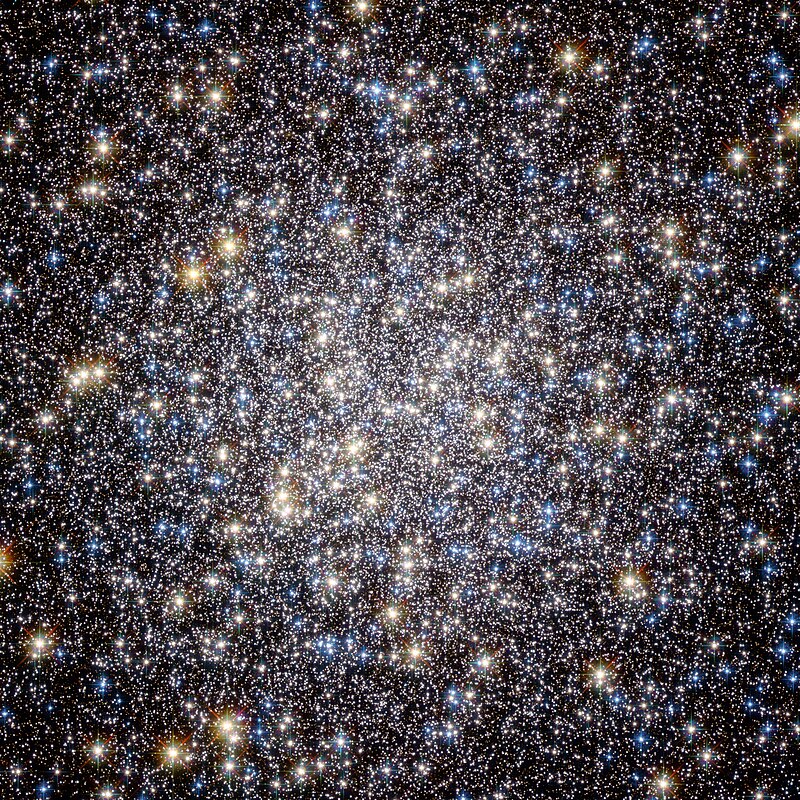
HST observations of Globular Clusters in the Milky Way are stunning. We want to build a forward model which uses a library of stellar spectra which we convolve with the correct broad band filters of the specific observations we want to match. We then want to build a forward model which aims to combine our theoretical stars into an image which once the point spread function of HST is applied matches our input data.
Model Galaxy images/spectra from 3D Simulations
We have access to many different galaxy formation simulations and want to explore to make virtual observations that we can compare directly with real observations. We want to explore what is required to make very fast predictions.
Model Galaxy images/spectra
This is a signficant project and breaks up into sub tasks. It likely is a good project for a group of students.
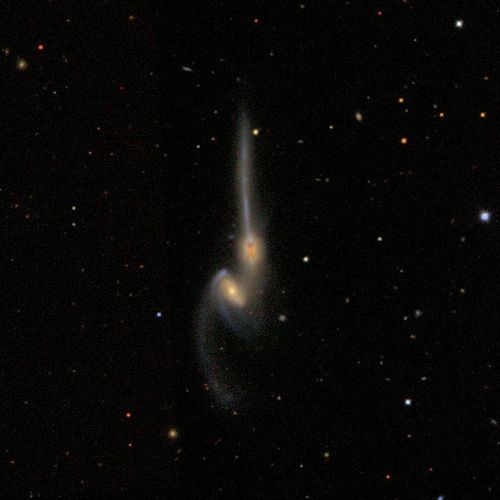
The image data of Galaxy Zoo 2 (Willett et al. 2019) is available online. This is supplemented by classifications carried out by a large number of volunteers. Leveraging DSPS from Hearin et al. (2023) we want to match all pixel colors.
Model the X-ray emission of an X-ray cluster
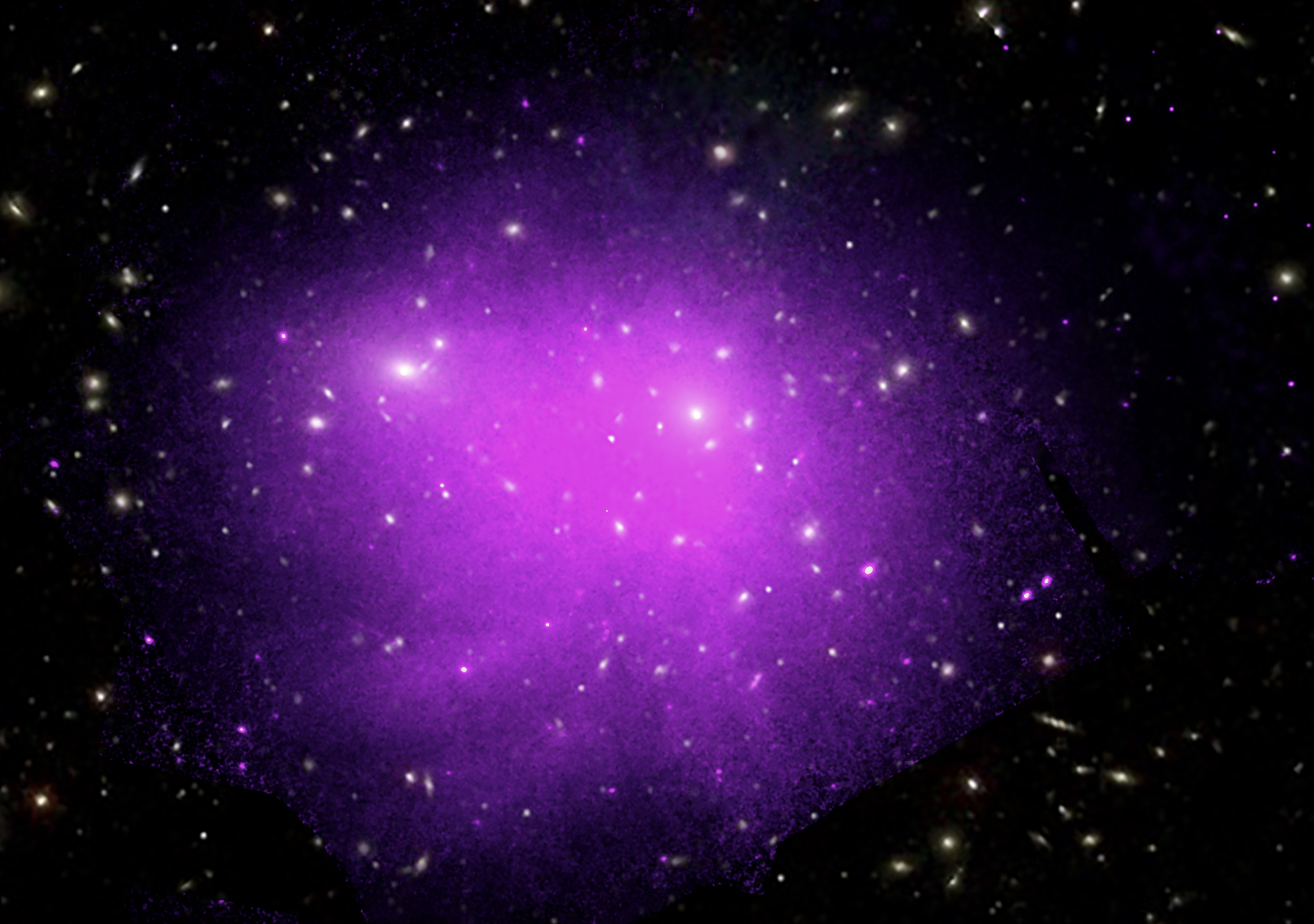
The X-ray emission comes from hot plasma in the galaxy cluster. In this project we want to think through how well we constrain a 3D density and temperature distribution to closely match a specific observation. How does adding spectral/energy information help in ths constraints?
Radiation from a 3D HII region
Radiation Hydro-Dynamics of a 3D HII region
Dynamics
Model a dwarf galaxy/GC disruption in gala
Study the Spitzer (equipartition) Instability in Globular Clusters
Use our N-body code, write your own, or use a professional one such like rebound to set up initial conditions that illustrate various aspects of Spitzer’s instability. The instability relates to having heavy stars mass segregate towards the center of a star cluster. Once they are more common they tend to dissipate energy to the lowe mass stars in the out parts via two body scattering. This leads the heavy masses to move to smaller radii moving away from equi-partition rather than towards equilibrium. See chapter 7.5.5 of Binney and Tremaine (2008).
Particle-Mesh Codes in Cosmology
Andrey Kravtsov wrote a wonderful set of instructions on how to approach writing your own particle mesh code specifically for numerical cosmology. There is now a beautifully implemented python version of cosmological PM by Breton (2024), called pysco, which also includes well developed initial conditions generation. I have many example Jupyter notebooks I can share with you also ones related to the Simplex in Cell technique Hahn and Angulo (2016). There are multiple possible projects building on this work. Our own Delon Shen wrote a beautiful set of notes that are even more pedagogical and interactive.
Make pysco use the phase-space sheet
E.g. you might incorporate the ideas from Abel, Hahn, and Kaehler (2012), Sousbie and Colombi (2016), and Hahn and Angulo (2016) into pysco.
Explore the statistics of 3D cosmological density
You might first just use fields as computed through the Lagrangian Perturbation theory implemented in pysco, i.e. the initial conditions. Once you have a pipeline to measure the spatial statistics you are interested in - Kymatio implements 1, 2 and 3D wavelet scattering transforms. Follow Cheng et al. (2023) and characterize the scattering coefficients for evolved cosmological density fields. - Measure the PDFs for the density fields for many different smoothing lengths and compare to the predictions given by pyLDT from Cataneo et al. (2021). - Explore kNN-CDFs from Banerjee and Abel (2021).
Statistical properties of 1,2 and 3D turbulence
The novelty in this project is that we will try to do very high dynamic range estimates of the statistical properties of turbulence by running a set of simulations which we connect in a one way approach. We will start with a 1D model which will help us practice everything we need. If we manage that we can extend it to 2 and 3D. Beattie et al. (2022) study the density PDF in supersonic MHD turbulence. We start by reading this paper to get a sense of the current questions in the field. We will assume as hypothesis that energy cascades only from large scales to samll scales. Hence when we simulate First step then is to use 1D hydro and look at decaying supersonic turbulence.
Numerical Cosmology
Radiation
Study Lyman-\(\alpha\) Radiation Transport
Implement the grid-less monte carlo transfer approach of Smith et al. (2025), reproduce some of their plots and discuss the approach. Stretch goal: Make a differentiable version. Feeding it one of its own solutions can you write a pipeline which recovers all input parameters and (further stretch) error bars on them?